

“If I can do it, then so can you!” This is a common phrase I repeat when speaking to youth groups and new professionals. My college experience along my with first positions as a nascent professional were daunting and overwhelming. Not because I lacked capability, but because I didn’t have a mentor. I didn’t have a trusted guide with more experience to support me in those experiences, which I desperately needed as a first generation college student. Because I learned culture and customs the hard way I prioritize speaking life and confidence into others. There is a great need for mentoring in minority communities, particularly among Blacks and Latinos, that are under-represented in many fields. Gallup reports that for America’s top jobs “workers who are Black, Hispanic and American Indian/Alaskan Native remain highly underrepresented.”
According to MENTOR, 85% of youth with a mentor say this experience contributed to the success in their educational endeavors. Check out the three E’s below on how mentoring in minority communities can have explosive impacts:
Exposure: Mentors provide invaluable exposure to diverse career paths and professional networks. This can be particularly impactful for individuals from underrepresented backgrounds who may have limited access to such opportunities. By connecting mentees with successful professionals in various fields, mentors broaden their horizons and inspire them to pursue ambitious goals. I’ve seen the eyes of high school students light up when I tell them I graduated from the same school as them and achieved professional success.
Engagement: Mentorship cultivates a sense of belonging and engagement within educational and professional communities. Through regular interactions with mentors, mentees develop strong relationships, build confidence, and feel supported in their personal and professional journeys. This sense of community can be especially crucial for individuals who may face systemic barriers and challenges. Because minorities can face a sense of exclusion in many settings, connecting with professionals of the same race or ethnicity is invaluable. I’ve seen Black girls become doctors because they were introduced to a Black female doctor in their formative years.
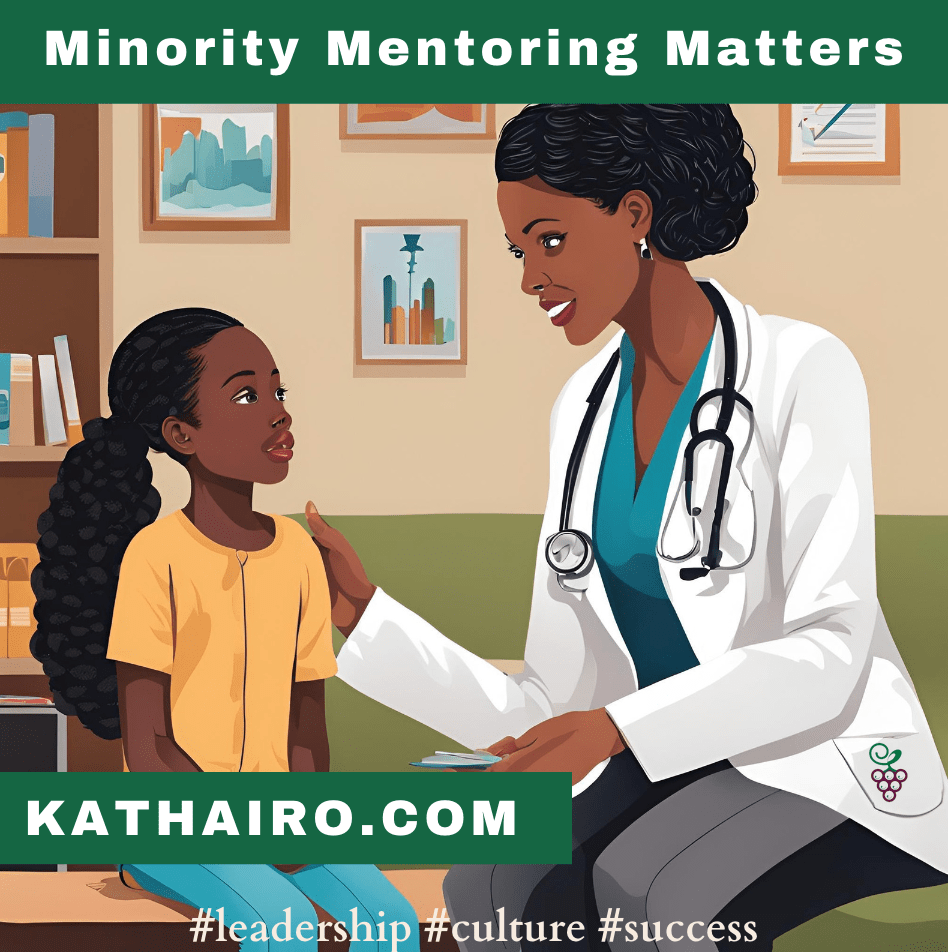
Equipping: Mentoring provides a safe and supportive space for mentees to express their aspirations, concerns, and challenges. Mentors offer guidance, encouragement, and constructive feedback, helping mentees develop essential skills such as critical thinking, problem-solving, and effective communication. This process empowers mentees to discover their unique talents and pursue their passions with greater confidence. Having this guidance from someone the mentee identifies with creates an even greater bond of trust.

Further, the MENTOR website says that 92% of youth that are mentored go on to volunteer in their communities. So the passing of knowledge and encouragement just keeps going! What have you learned over the course of your career? What do you wish you hadn’t learned the hard way? Someone needs that knowledge. Pass it on!
-Proverbs 13:20

 Kathairo Solutions
Leave a reply to Caring for Someone When Feelings Take the Lead – Kathairo Solutions Cancel reply