
How do we reconcile our national narrative of “progress” with legal decisions that seem to systematically dismantle the 20th century’s hardest-won victories?
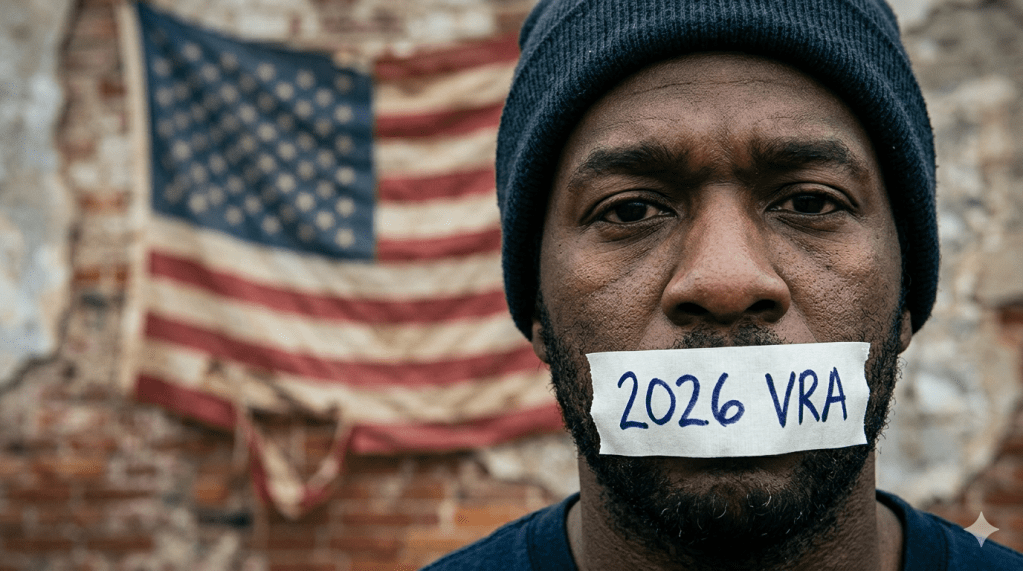
The recent action by the Supreme Court to expedite a ruling that effectively guts Section 2 of the Voting Rights Act is more than a procedural update—it is a profound regression of American democracy. By allowing Louisiana to move forward with a congressional map that dilutes Black voting power, the Court has signaled a retreat from the protections that defined the post-1965 era.
As a researcher focused on the intersections of race and culture, I see this not just as a legal shift, but as a cultural betrayal. We are moving from a “results-based” standard—where the impact of a map mattered—to an “intent-based” standard that is nearly impossible to prove. This technicality provides a shield for modern-day disenfranchisement.

I grew up listening to my grandfather recount the visceral struggle for the 1965 Voting Rights Act. He spoke of it as a permanent shield, a hard-won victory he believed his grandchildren would never have to defend again. To see these protections dismantled “ahead of schedule” in my lifetime is a sobering reminder that progress is not a straight line; it is a fragile agreement that can be rescinded.
When we silence communities of color through surgical gerrymandering, the entire nation suffers. A democracy that selects its voters rather than the other way around is a democracy in name only. We are watching the architecture of inclusion be dismantled in real-time.
As W.E.B. Du Bois poignantly reminded us:
“The power of the ballot we need in sheer self-defense, else what shall save us from a second slavery?”
Discussion Questions
- For those who, like my grandfather, saw the VRA as a permanent fixture: Does this feel like a temporary procedural setback or a fundamental shift in the American experiment?
- As the legal standard shifts from “impact” to “intent,” how must our strategies for advocacy and civil rights litigation evolve to meet this new hurdle?
- What responsibility do corporate and cultural leaders have to speak up for voting access when the judicial guardrails begin to lean back?
- Can we truly call our system a representative democracy if the maps are drawn to protect the status quo rather than reflect the actual diversity of the people?
- How does the Christian ethic of equity relate to this issue? Is this just political or theological?


Leave a Reply