
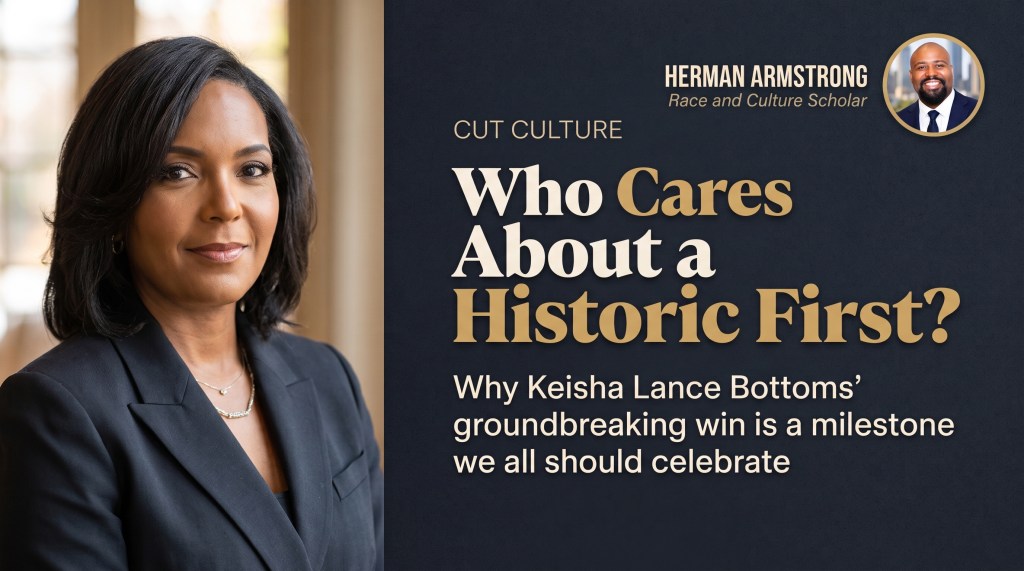
I have a personal rule: I generally do not post about politics online. It saves my time, protects my energy, and keeps me out of cyclical debates. However, this week, I broke my own rule. I felt compelled to recognize an incredible, long-overdue milestone in the United States: the election of Keisha Lance Bottoms as the Governor of Georgia.
Yet, earlier this week, I mentioned how shocked I was to realize that our country had never had a Black female governor, and how elated I am that we have finally shattered this ceiling. I congratulated Governor-Elect Bottoms and thanked Stacey Abrams for the dynamic, trailblazing work that helped pave the way.
Predictably, it didn’t take long for the pushback to arrive. One response simply asked: Who cares about skin color?
My immediate reply was brief. I stated that because the impacts of slavery and systemic oppression still echo into the modern day, a victory like this is a profound reason to celebrate. But here, I want to probe a bit deeper into that question.
Less than two centuries ago, Black people were legally classified as property in this country. At the very bottom of that brutal societal hierarchy was the Black woman. Historically, Black women were subjected entirely to the whims of the majority. They were exploited for labor and used as non-consenting subjects for medical experiments; including horrific gynecological surgeries performed without anesthesia. From the brutalities of slavery through the suffocating laws of Jim Crow and into the present day, Black women have been disproportionately underpaid, undervalued, and underrepresented in positions of power, despite standing today as one of the most highly educated demographics in the nation.
So, when we see Governor-Elect Bottoms claim victory; alongside other groundbreaking women this week, such as Deb Haaland becoming the first Native American woman elected governor, Gina Hinojosa becoming Texas’s first Latina governor, and Peggy Flanagan becoming the first Native American woman elected to the U.S. Senate; it is much more than just a political win. It is a monumental pushback against the oppressive framework this country was built upon.
I was raised by a strong, resilient Black woman, and I am blessed to be married to one today. I know their brilliance, their fortitude, and the unique hurdles they navigate.
So, who cares about a historic first? Anyone concerned with true equity. Anyone who honors the image of God in all people. Anyone who believes in reparative justice. We celebrate because representation is not just about who is in the room, it is about permanently rewriting the rules of who is allowed to lead.


Leave a Reply